
Yacht training2026-02-21T20:41:17+01:00

prepared for real conditions 


Yacht training

Yacht training from professionals

Practice that provides security.

We have skippered monohulls and multihulls of various sizes worldwide – in training, transfers, regattas and team training. What we teach is based on the standards of DSV/RYA and, above all, on real experience.

Training, das dort ansetzt, wo Sie stehen
Ob Hafenmanöver, Törnvorbereitung oder Offshore-Planung – wir holen Sie auf Ihrem Niveau ab.
Manöver trainieren wir, bis sie sicher sitzen:
– An- und Ablegen bei Wind
– Arbeiten mit Radeffekt und Springs
– Präzise Manöver unter Motor und Segeln

Fit for cruising, long journeys & challenging conditions
We practice the procedures that make for safe ship handling:
– Passage planning, weather & tides
– Rig trim, reef management & sailing maneuvers
– Radar, AIS, radio & collision avoidance
– Anchoring, power, engine & troubleshooting
– Crew management & safety on board

Learning from many nautical miles
In our core business, Yacht deliveries, we are used to passing on knowledge clearly, quickly and practically – because we need strong partners at sea. You too can benefit from this approach!

Yachts

  • Monohull yachts
  • Multihull yachts
  • Motor yachts
  • On your own yacht
  • On a chartered yacht

Areas

  • North & Baltic Sea
  • Mediterranean
  • Canary Islands
  • Atlantic
  • Home waters

Yacht training on catamaran

why Yachtskipper.eu

Yacht training from sailing professionals

free & non-binding

Get a quote

Step 1 of 7
What would you like to train with?

what our customers say

Customer testimonials
what it costs

Examples

Our listed prices are for guidance only. We create a personal offer for every yacht training. Just contact us – we will be happy to advise you.

about us

experienced trainers

Our trainers bring thousands of nautical miles from transfers and offshore adventures. They combine professional training with real practice – worldwide, on monohulls and multihulls. What they teach is more than technology: it is routine, clarity in decisions and the confidence to master a situation on the water with confidence.
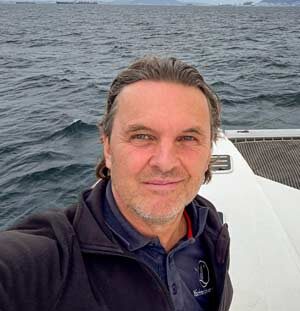
Rainer Holtorff

Rainer Holtorff

Founder and owner of Yachtskipper.eu

Thomas Götzen

Back office, admin and skipper, on board since 2016.

Holger Elschenbroich

Skipper and back office: quality control

Peer Kunz

Skipper and technical advisor. Location Algarve.

Q&A

frequently asked questions

Get further – with cruise support2025-12-15T22:17:54+01:00

How about cruise support? If you want to sail your boat in unfamiliar territory, but feel insecure outside familiar waters, we will provide you with an experienced, qualified skipper. We ensure your safety and at the same time help you develop new skills and build the necessary confidence for future cruises.

What is the overarching goal of the skipper training?2025-12-15T21:12:52+01:00

Our goal is for you to sail with confidence, overview, and joy – regardless of the area. You should be able to make decisions safely, assess situations, and lead your ship with confidence. Everything learned is immediately put into practice on board. The goal is not only understanding, but also confidence in action – even under stress, in bad weather, or in complex situations.

Yacht training – directly on your ship!2025-12-15T20:49:36+01:00

Ideal for learning to master your yacht better. Whether it has been newly purchased or you have only taken a longer break, we provide on-site training according to your needs.

Can I specifically prepare for a long voyage with the training?2025-12-15T21:11:02+01:00

Yes, that is one of our main focuses. We systematically prepare you for longer and more challenging trips, so that you can confidently and actively manage your ship and not just reach your destination ‘somehow’.

What long voyage content is covered?

Depending on requirements, including:

  • Weather and wave analysis

  • Passage planning and offshore strategies

  • Reef management and sail trim

  • Crew management and stress management

  • Anchoring techniques

  • Energy management

  • Engine knowledge and troubleshooting

  • Collision avoidance (radar, AIS)

  • Digital and classic navigation (incl. sextant)

  • Emergency management and structured procedures

Why are harbor maneuvers a focus of the training?2025-12-15T21:04:28+01:00

Harbor maneuvers are among the most stressful situations on board – especially with crosswinds, limited space, or unfamiliar technology. This is precisely where we start, to develop safety, routine, and composure.

Which harbor maneuvers are specifically trained?

Among others:

  • Coming alongside and casting off in crosswinds

  • Safe coming alongside (e.g. at gas stations)

  • Using the paddle wheel effect

  • Working with forward and stern springs

  • Precise maneuvering in tight spaces

We practice until the procedures are reliably in place.

Who is the skipper training suitable for?2025-12-15T21:01:25+01:00

This is yacht training on your own vessel. It is ideal for learning to master your yacht better. Whether it has been newly purchased or you have only taken a longer break, we train on site and according to your needs. Our yacht and skipper training is for anyone who wants to expand their skills as a skipper safely and confidently – regardless of whether you are just sailing your first own trips or have already gained experience. The training is always individually adapted to your current level of knowledge. If necessary, there is then the possibility of participating in transfer trips in order to deepen and implement the knowledge gained on long voyages.

What distinguishes this skipper training from classic sailing courses?2025-12-15T20:57:05+01:00

Our skipper training is consistently practice-oriented. Safety does not arise in the seminar room, but on the water. We do not impart abstract theory, but real experience from many thousands of nautical miles – directly applied in the everyday life of a skipper.

Is crew leadership and teamwork also trained?2025-12-15T21:18:41+01:00

Yes. Clear communication, timely decisions, and dealing with fear, seasickness, and stress are central components of a safe everyday life on board – especially on longer voyages.

Go to Top