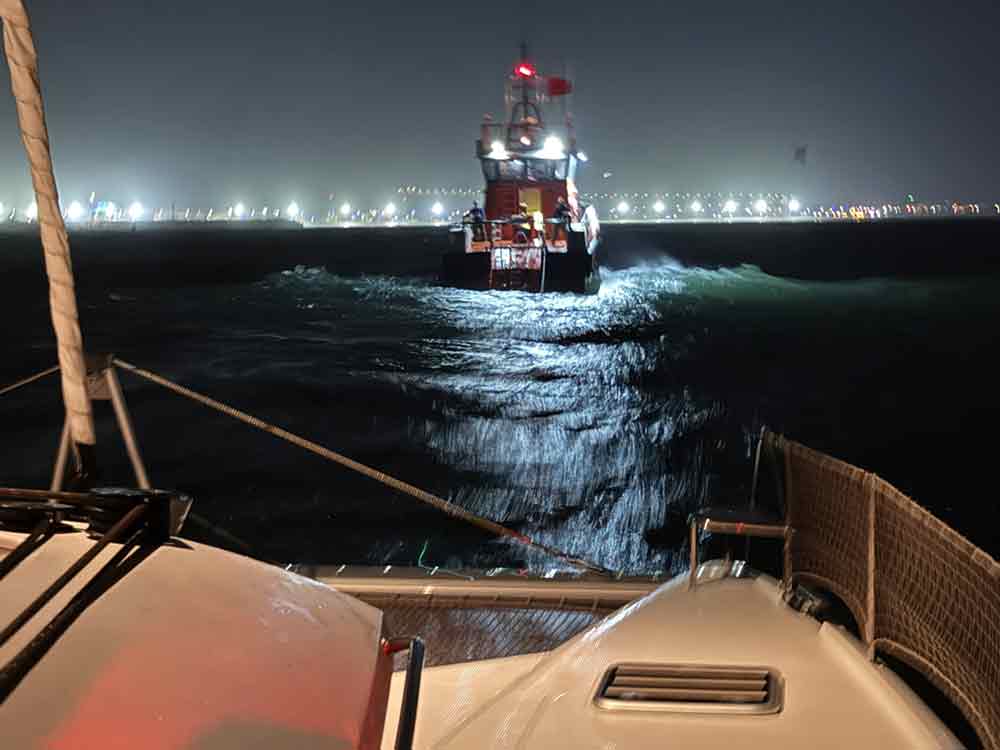
Parliamentary Marine Evening / Cap San Diego / Hamburg
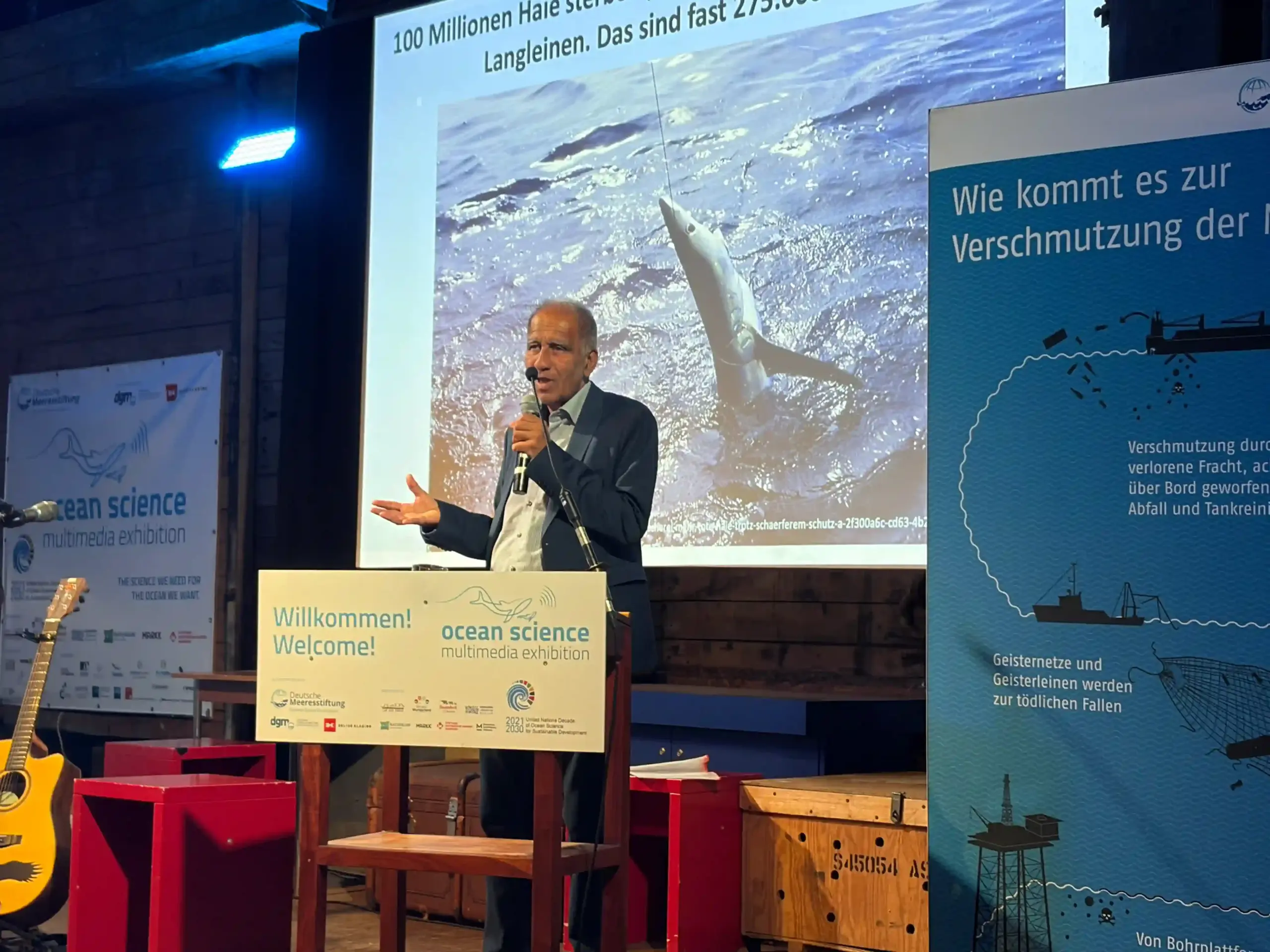
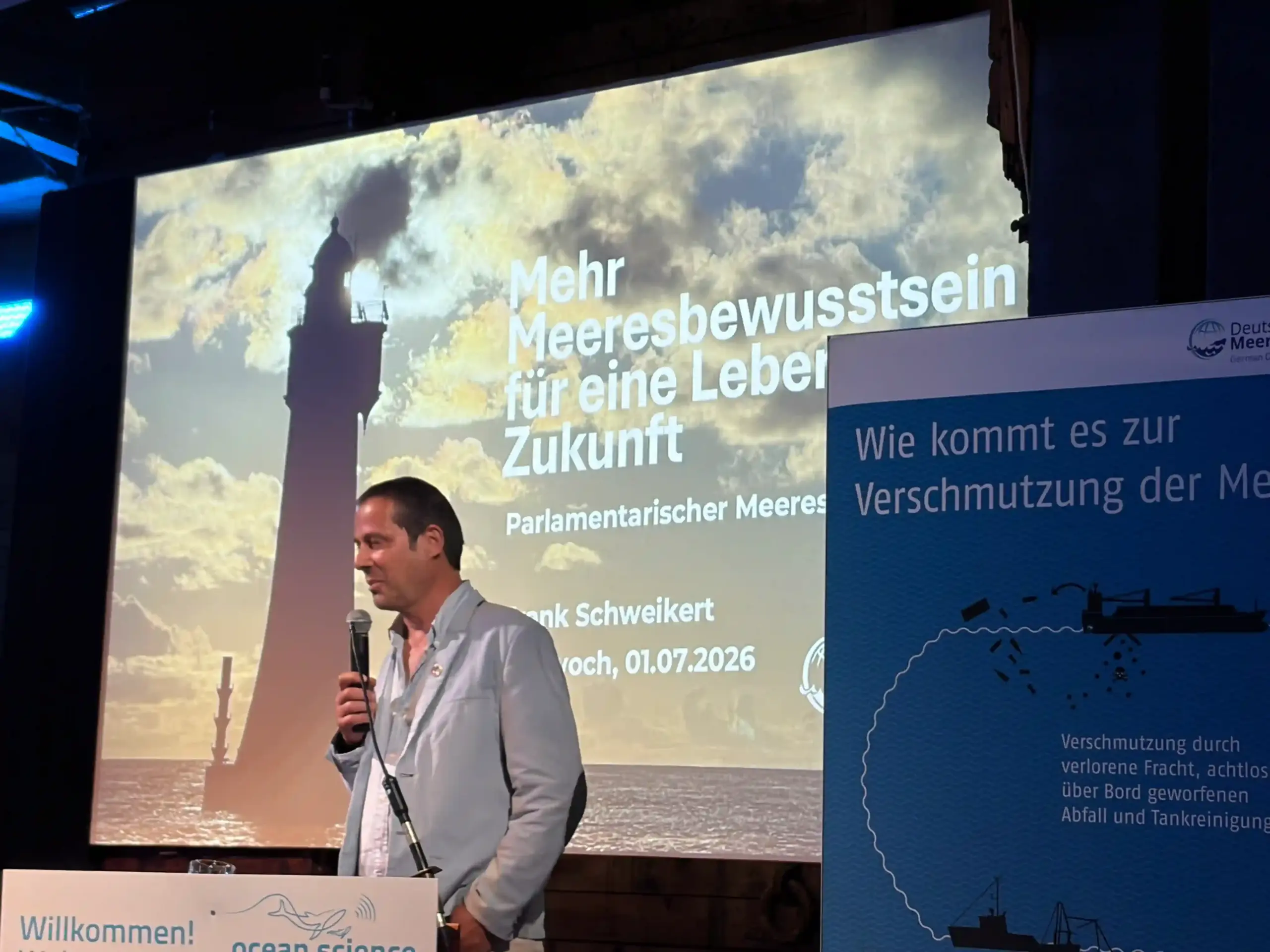
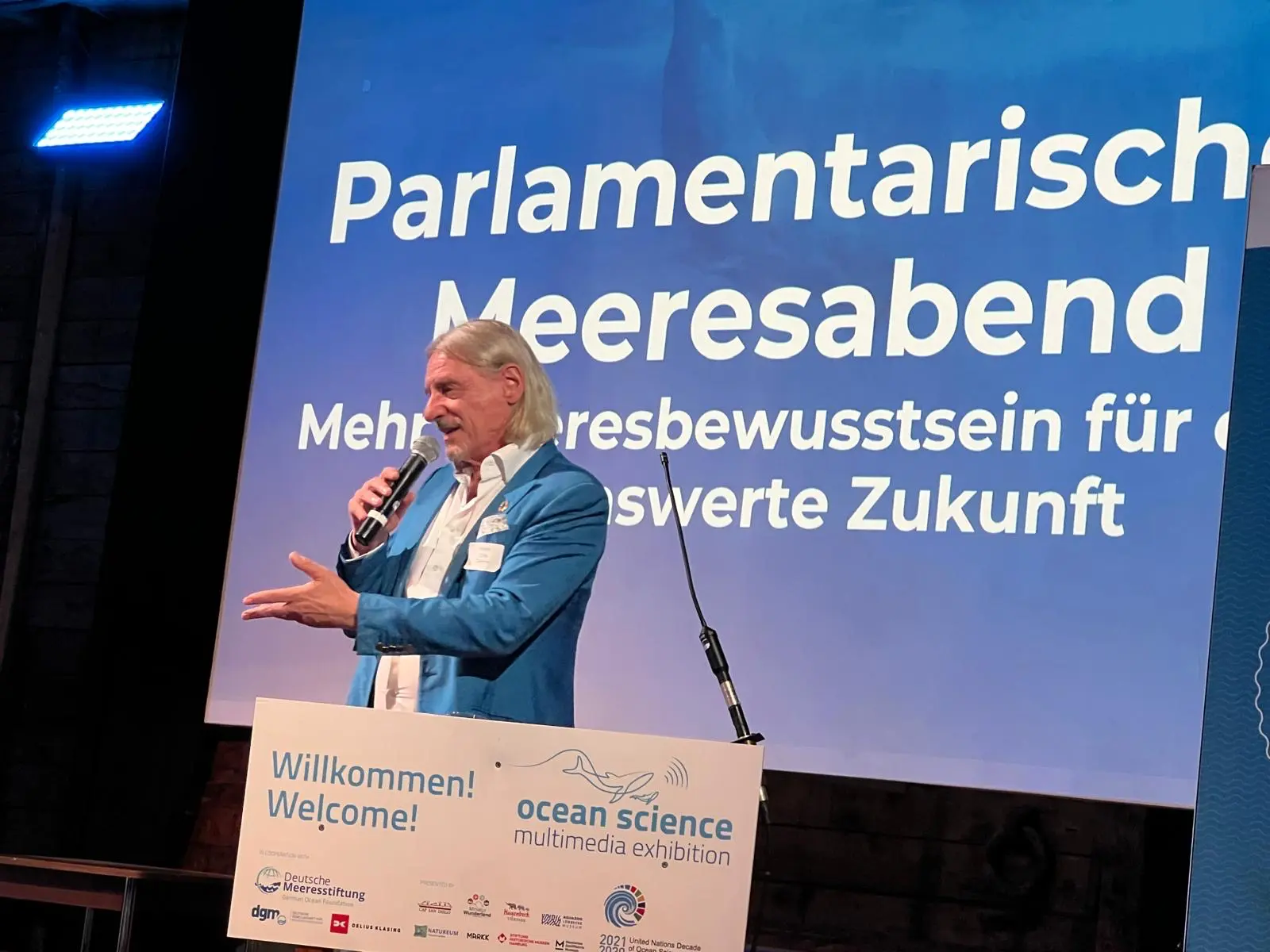
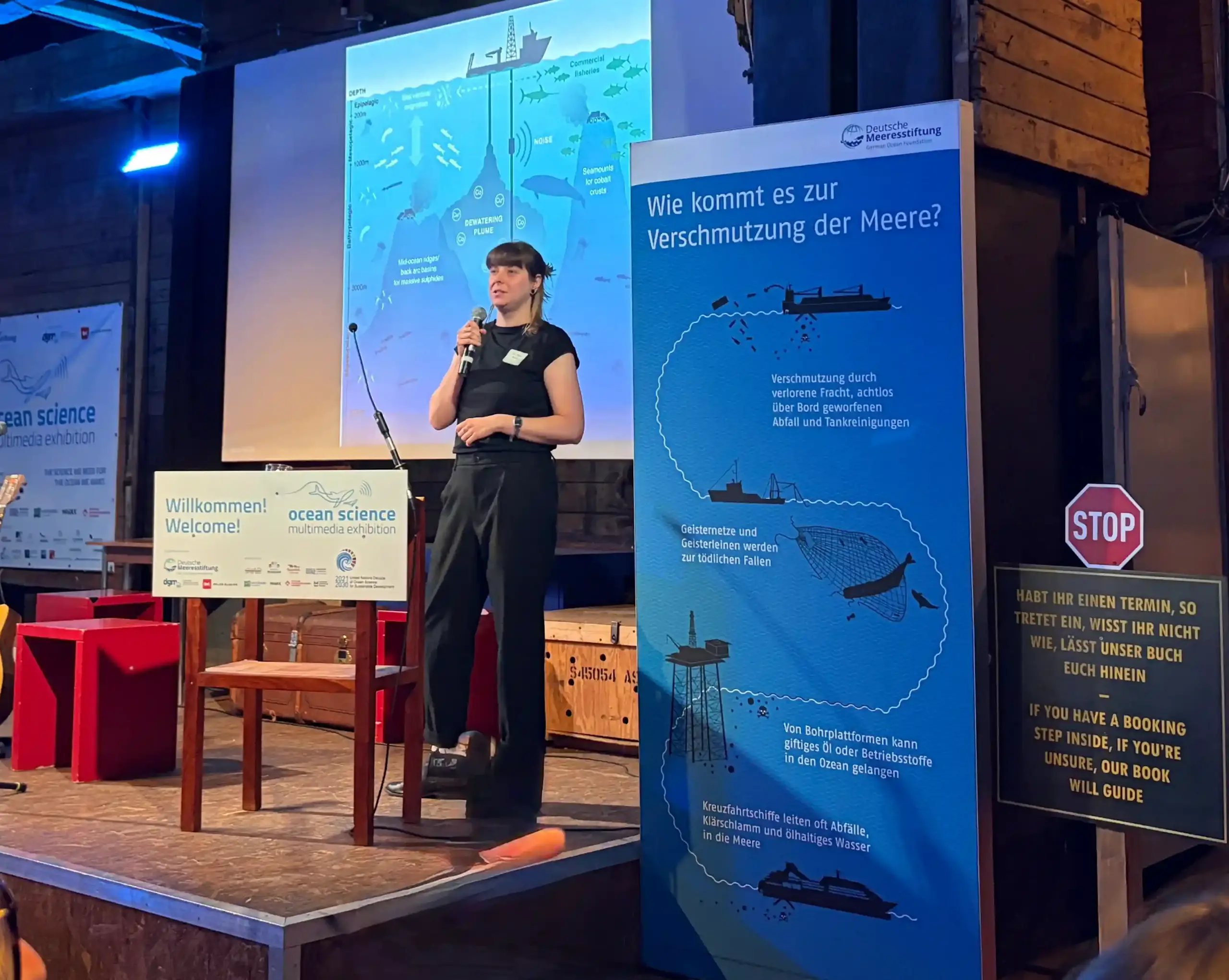
An exciting evening aboard the Cap San Diego in Hamburg – dedicated entirely to marine conservation.
Under the motto “Greater Ocean Awareness for a Sustainable Future,” representatives from science, politics, education, culture, and civil society came together to discuss the state of the oceans, their significance for our climate, and human responsibility. Following the presentations, the reception marking the 11th anniversary of the German Ocean Foundation provided an opportunity for exchange aboard the vessel.
The evening began with a screening of the film “Ocean with David Attenborough.” The film is a compelling appeal to finally take marine conservation seriously. Approximately two-thirds of our planet is covered by water – a fact easily overlooked by those living on land. Yet what happens in the oceans inevitably affects us all.
The film impressively demonstrates the consequences of intensive coastal fishing and bottom trawling for sensitive habitats. Where kelp forests and seagrass meadows once provided vital refuges for countless species, destructive fishing methods often leave barren areas on the seabed. The film paints a sobering picture of human intervention – but also offers hope: if we succeed in effectively protecting large portions of the oceans and important coastal regions, marine ecosystems can regenerate remarkably well.
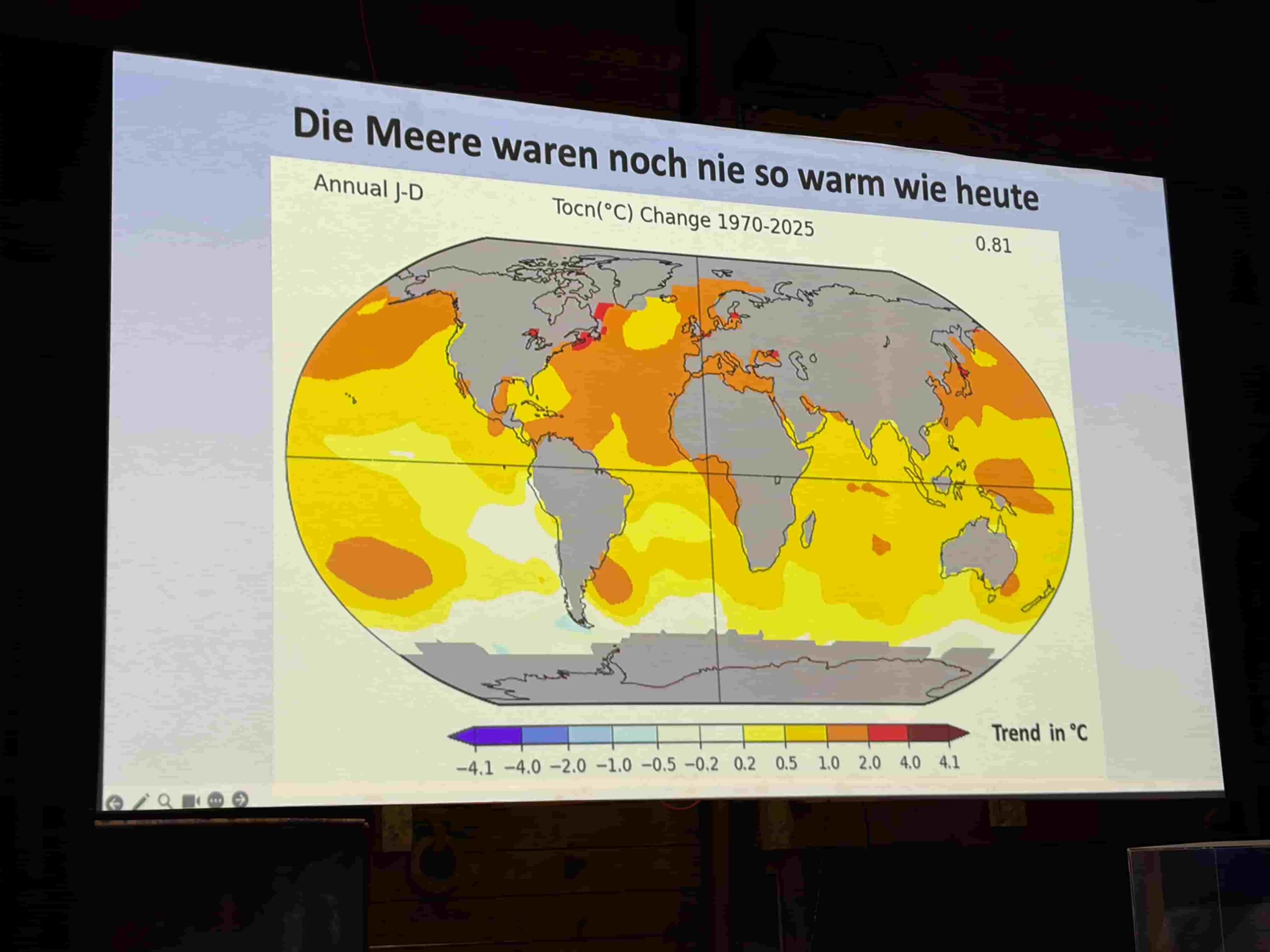
Following the film, there was a musical performance by Pohlmann, after which Frank Otto spoke about the founding of the German Ocean Foundation. Frank Schweikert introduced the evening and made clear how dramatically the situation of the oceans has already changed. Among other points, he referenced current data from the EU climate program Copernicus, according to which the average surface temperature of the oceans has recently reached exceptionally high levels.
Another highlight of the evening was the presentation by Prof. Dr. Mojib Latif. As always, he succeeded in conveying serious scientific relationships in a comprehensible, engaging, and compelling manner. He explained why the ocean is systemically critical for humanity – not only as a habitat, but also as a decisive factor in the climate system. His message was clear: if we fail to limit global warming, the consequences for the oceans and therefore for humanity will be severe.
Katja Günther, State Secretary in the Ministry for Energy Transition, Climate Protection, Environment and Nature in Schleswig-Holstein, also emphasized how difficult it is to advance political changes in marine conservation. The ocean is difficult for many people to grasp: we usually see only the surface of the ocean, not into it. As a result, many problems remain invisible. As an example, she cited the eutrophication of the Baltic Sea and also addressed the responsibility of water sports – such as the handling of sewage tanks and the use of available disposal facilities.
Particularly inspiring was the contribution by Dr. Wiebke Endres, who collaborates with the German Ocean Foundation in the education sector. She is co-founder of Germany’s first marine secondary school, which focuses on project-based marine education. Students there are meant to learn not only theoretical knowledge from STEM subjects, but to understand and experience concrete relationships. One statement was particularly memorable:
“You can only love what you know. And you can only protect what you love.”
This very idea also aligns with the educational work of the German Ocean Foundation. This is further underscored by the Ocean Science multimedia exhibition of the German Ocean Foundation aboard the Cap San Diego. A completely solar-powered exhibition dedicated to ocean research that will remain in place until 2030 (!). On display are exhibits such as drifters (measuring buoys), a model of a plastic waste collection catamaran, interactive graphics on deep-sea mining, and much more…https://www.meeresstiftung.de/ocean-science-ausstellung
Another impressive presentation was given by Dr. Alica Torkov from the Senckenberg Society for Natural Research. She clearly illustrated the risks that mining manganese nodules in the deep sea can pose to ocean biodiversity. Precisely because raw materials such as manganese play a role in the transition away from fossil fuels, the debate is complex. Dr. Torkov made clear that scientists today no longer want to be merely silent advisors on the sidelines. When scientific findings have no political consequences, they must engage more actively in public discourse.
To conclude, Pohlmann performed the song “Glashaus.” Thematically, this fit the evening very well: no one can point fingers at others regarding climate and environmental protection without contradictions. One person lives vegan but flies frequently. Another grows vegetables but has a passion for vintage cars. And those who live in glass houses should not throw stones.
That is precisely why this evening was so valuable. It did not point fingers at individuals, but made clear that marine conservation is a shared responsibility – for politics, science, business, water sports, and society.
For us at Yachtskipper.eu, this topic is not abstract. We regularly operate on the North Sea, Baltic Sea, Atlantic, and Mediterranean. We experience the ocean as a working environment, natural environment, and living environment. All the more important that we not only navigate across the ocean, but also take responsibility for its protection.
Share this blog -
Subscribe to our newsletter to receive the latest blogs & stories from Yachtskipper.eu
interesting blogs