From Greifswald to Palma aboard a Y7
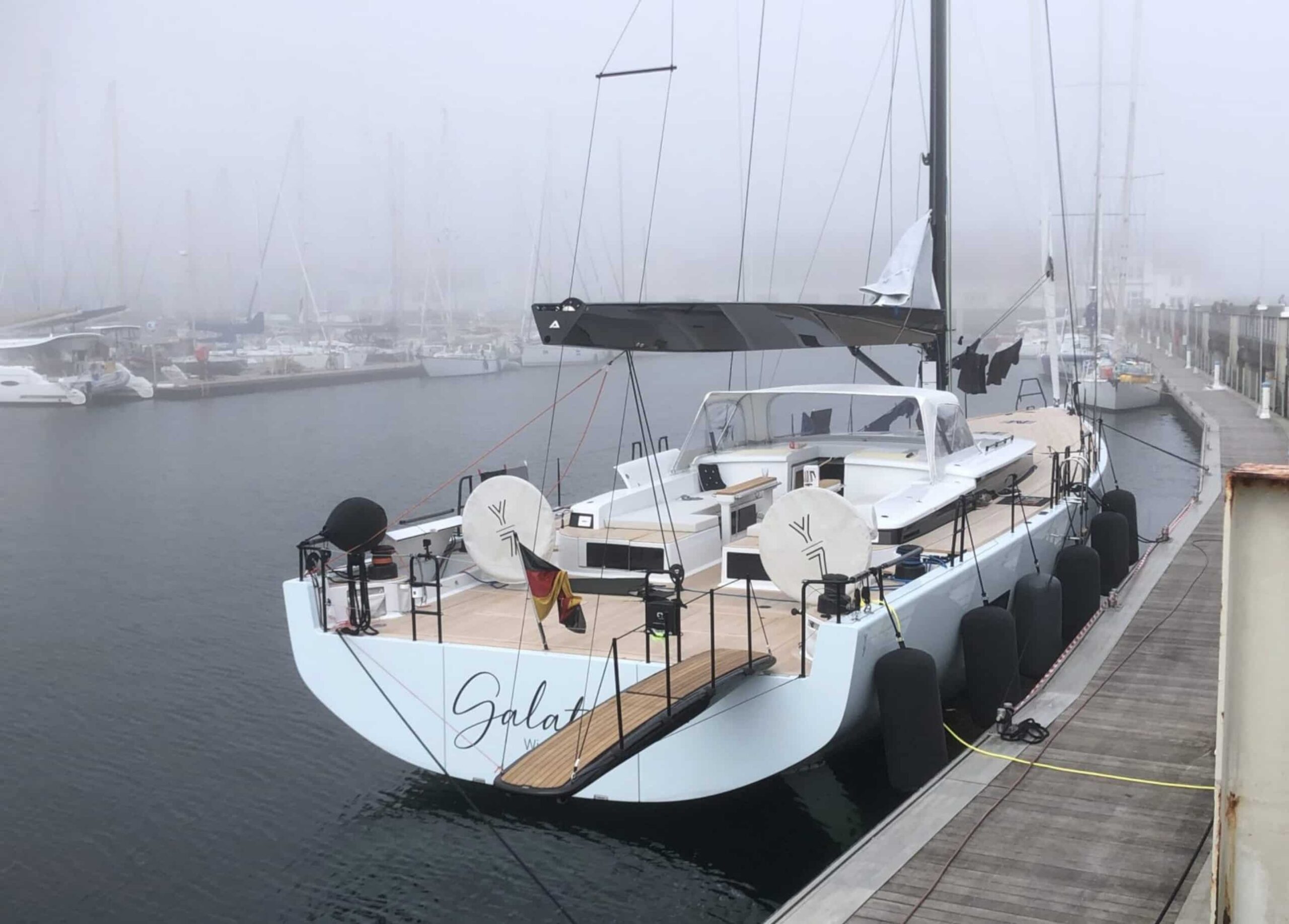
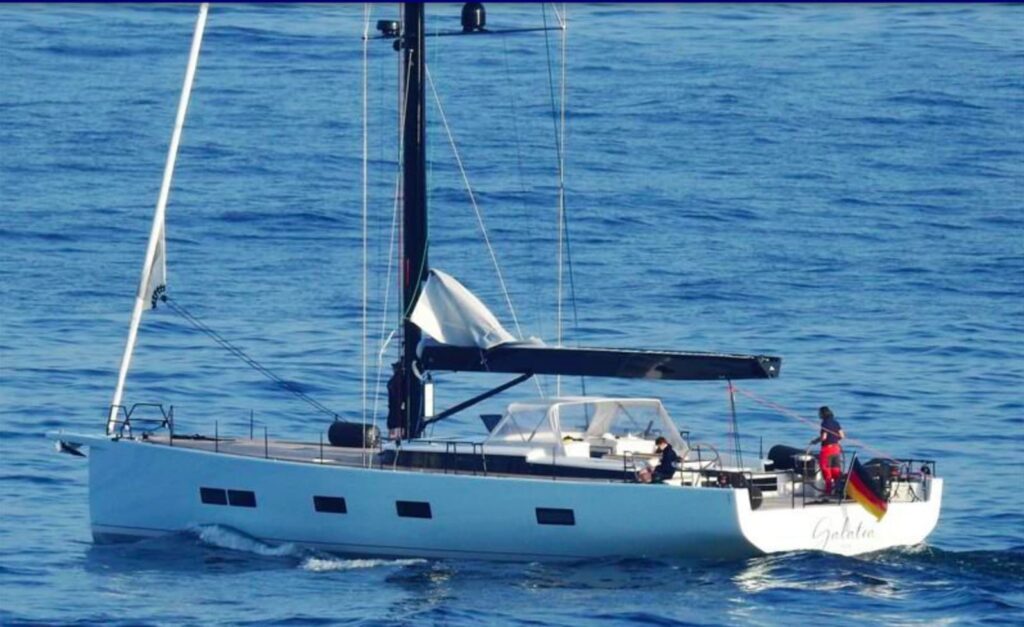
Statement on the delivery of a Y7 (70 feet) from Greifswald to Palma de Mallorca
(Names have been changed).
For yacht deliveries, I normally assemble my crews well in advance, choosing colleagues and fellow sailors according to the requirements of the voyage. In this case, the short notice and the length of the assignment meant I had to hire crew members I knew but had never sailed with before. Sven Dose was assigned to me as a shipyard employee. I had, however, been warned about him beforehand.
The first part of the voyage, as far as Holland, was dominated by commissioning the yacht and dealing with human and technical problems. In Kiel, for example, a technician came aboard and there was a crew change: single-handed sailor Peter Hinrichs, who had proved too difficult, left, and Frederick Labrenz came aboard. Co-skipper Jan Behrens and I had worked well together up to that point. My relationship with Sven Dose was difficult from the outset. On the one hand, he had been involved in the build and brought valuable skills and contacts; on the other, he began issuing orders from the start without even discussing them first. As we entered Cuxhaven, for example, he said: “We’re going to tie up at the fuel dock first!” To me as skipper, this was a strange instruction: stopping at the fuel dock first might make sense logistically, but it was hardly his decision alone to make, if indeed it was his decision at all. Or in Bremerhaven, when he said: “If the AIS doesn’t work, we’ll go out into the North Sea without it!” In the end, I would have had to answer for the consequences, not him. Fortunately, we handled it differently; there was thick fog in the North Sea.
Sven Dose insisted on a two-person watch system because they had always done it that way. Even in a calm, with excellent visibility and little traffic, which makes no sense to me on a long passage. Frequent watches with two people, regardless of the conditions, reduce the entire crew’s rest because they shorten the time off watch.
Sven Dose, who now also wanted two-person watches, stood watch with Jan Behrens, and from then on the two spent a great deal of time together. I can certainly be faulted for not putting a stop to it and not seeing what it might lead to.
By Scheveningen, we had dealt with the worst of the new yacht’s teething problems and could concentrate on the passage. We called at Brest, crossed the Bay of Biscay and sailed south along the Portuguese coast.
Sven was in charge of setting and lowering the sails from the outset, which was fine with me. He had helped assemble an Axxon rig before and knew the hydraulic furling boom and how to set sail on this yacht better than any of us. What surprised me was that he insisted there was no provision for rigging a preventer and rejected any kind of improvisation.
The sail handling under his direction was carried out correctly, but mistakes were also made:
Off Portugal, fellow crew member Frederick was at the winch towards the end of hoisting the mainsail when he complained that the halyard tension was far too high. The deckhand ordered Frederick to keep the electric winch turning because the luff was still not tight enough. Frederick did so, but again raised concerns about the halyard tension. The deckhand told him to continue. What the deckhand had overlooked was that the auxiliary lines, a triangle of Dyneema lines that kept the boom from swinging while motoring, were under tension. When this arrangement broke, the enormous boom shot upwards.
I wanted to dock in Cascais to refuel. Although the stern thruster had stopped working back in Germany, I had managed the harbour manoeuvres quite well so far, and was therefore confident despite the strong crosswind. This time, however, I had difficulty handling the yacht. The vessel was not in danger; we were simply hanging to leeward on the starboard stern line.
To get us out of this situation and ensure that nothing happened, I instructed the deckhand to put out a ball fender at a particular spot. He shouted: “There’s already a fender there!” I repeated the instruction because I could see an urgent need for a larger fender at that spot. The deckhand did not comply. When the situation I had feared arose and the yacht threatened to hit the pier, Frederick rushed over with the ball fender and saved the situation.
At that point, I should have given Sven Dose a choice: follow my instructions from then on or leave the yacht immediately. The next telling incident involving him and his regular watch partner Behrens occurred just one day later, west of the Strait of Gibraltar. In the middle of the night, orcas attacked the yacht, specifically its rudders. Yet the watch leader and his partner did not think it necessary to wake me, even though I was well acquainted with the issue from several passages through these waters. To prevent damage to the vessel, coast guard guidance recommends, for example, switching off all electronics and not holding the rudders in place. This was not done.
Dose had started speaking disparagingly about me early on, repeatedly turning up his nose and turning people against me. By now, however, his bullish, defiant manner had rubbed off on his watch partner Behrens, who also began to distance himself from me. Perhaps he was calculating, hoping to work with the shipyard, or perhaps it was simply weakness. I do not know.
The open rift came in the harbour of Puerto Banús, where we had to put in because we had been unable to get a drop of water in either Cascais or Gibraltar. The wind was blowing straight into the narrow harbour at over 20 knots. I admit I was tense. After the difficulties docking in Cascais, I had been warned how quickly this yacht could get into trouble in a crosswind. To be safe, I discussed the procedure with the marina office by phone. They promised the following: shortly before entering, we would contact a marina attendant by radio on the working channel. The attendant would then be waiting at the reception pontoon to assign us a berth. I would have preferred a dinghy as well, since the bow thruster can evidently only be used briefly.
When we arrived, I tried several times to call the marina on its radio channel, but there was no answer. As we passed the reservation pontoon, there was no sign of the promised attendant either. I called across because a door at the fuel dock building was open. This was apparently too much for Sven Dose, who confronted me and told me to stop “shouting” and “calm down.”
The next morning, as we are leaving the berth, I point out to Frederick that a line I intend to power against with a 35-tonne yacht cannot be held by hand. Frederick refuses to accept this and keeps holding the line, so I raise my voice in the middle of the manoeuvre. Sven Dose again confronts me sharply and, once we are out, calls me the “worst skipper” he knows. He holds me solely responsible for our failure to get water anywhere in Gibraltar the previous day, saying I “should have known beforehand.” Co-skipper Behrens, who has not once openly criticised me during the entire voyage up to this point, joins in, shouting that what I am doing is “absolutely appalling.” When I ask him what specifically he means, he has nothing to say.
Dose announces that he no longer wants to continue with me to Italy after the repair stop in Mallorca. The atmosphere on board is in ruins. Somehow we carry on, but the mutiny continues:
Based on the wind forecast, I set a waypoint 30 nautical miles east of Cape Palos. I know that only by keeping that far east will we be able to use the southwesterly winds; otherwise, we will have to motor through calms and headwinds. Everyone on board has a smartphone with weather forecasts and should be able to understand this. Yet when I come out of my bunk after my off-watch, the shore is close: Dose and Behrens changed course on their own authority hours earlier and stayed near the coast. The result: first a calm, then headwinds well into the night.
On the way to Mallorca, just past Ibiza, comes Dose’s last stroke of genius. Saharan dust falls on the deck with the rain. Dose and Behrens set to work, drawing Frederick in as well despite his lack of sleep, and spend an hour scrubbing the entire deck. I have nothing against a clean boat, but I have washed down enough decks to know there is no point if more dust falls with the rain five minutes later. And that is exactly what happened. Before we could even see Mallorca, the yacht was red again.
After we dock in Palma in mid-afternoon, with temperatures at 35°C, no breeze and 90% humidity, the deck is washed and scrubbed again. Once again, everyone gives it their all. The next shower came just a few hours later and had already been foreseeable during the cleaning.
Conclusion:
I do not run yachts like military vessels. Instead, I normally draw on the skills of my fellow sailors, who I hope are intelligent, to achieve the best result.
Apparently, some people cannot be given that freedom. Sven Dose seems to have been kept on a short leash in the past. If he was assigned as the “shipyard’s watchdog,” the mistake lay in the arrangement from the outset. That might work with a novice, but not with an experienced skipper.
Frederick Labrenz remained neutral to the end. A pleasant, reserved fellow sailor who sought to get along with everyone. He told me that Dose and Behrens became noticeably friendlier towards him from a certain point onwards, having previously treated him rather brusquely. One can speculate about what lay behind that change.
Jan Behrens is a questionable character in my eyes. Hired as co-skipper, he turned away from me without warning and placed himself under the deckhand’s authority. Was he calculating? Or was it weakness? In hindsight, his friendliness seems insincere to me.
It is remarkable: the larger the yachts get, the more likely you are to find yourself in a shark tank…
Rainer Holtorff, Hamburg