Orca Attacks on Sailing Yachts

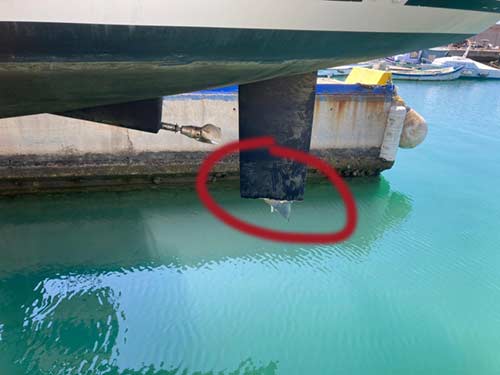
Since July 2020, immediately after the global lockdown, there have been repeated attacks by orcas on yachts off the coast of the Iberian Peninsula. These usually follow the same pattern: A yacht, whether it is running under engine or sailing, is approached by several, mostly young orcas. The large dolphins swim parallel to the ship for up to an hour and target the rudder and keel. The rudders of the yachts are particularly in focus: The mammals bite into them, ram and damage them in such a way that some of the ships have to be towed to the nearest port to carry out extensive repairs.
 Science and the public are so far at a loss to explain these orca attacks. The attempted explanations range from reactions to too much ship noise, to a simple play instinct of young “rowdies” and the driving away of predators, to a concerted, symbolic reaction of the animals to the destructive influence of humans against nature.
In 2021, we sailed through the affected areas more than 20 times. Our crews were also affected twice. Only twice, one can actually say, given the number of orca attacks – in 2021 alone there should have been over 150.
The first time it happened to us was when we were traveling with a brand new Y7. The orcas came at night in the Gulf of Cadiz and worked on the rudder of this yacht for a good hour. The engine was switched off, the yacht was just drifting, then they disappeared again.
The second time, a crew of three, with one of our skippers, was hit (YACHT reported). They were traveling with a Beneteau 38 in the same place, not far from Barbate, also in the Gulf of Cadiz, 30 miles from the Strait of Gibraltar. Fred, our skipper on the trip, reported that the orcas attacked 17 times before they disappeared again.
While the large Y7 (70 feet) showed no damage after the orca attack, the Beneteau was hit harder. The rudder was partially bitten off, and the smaller ship also had to take more punishment on the keel due to the constant rammings.
We are currently back in the “orca area”, this time with a cat, a Lagoon 50. If you are potentially affected, you start to wonder whether you can’t defend yourself or at least somehow deter the orcas. The Portuguese and Spanish authorities recommend switching everything off when in contact with the orcas, i.e. playing “dead”, so that the animals are not additionally irritated. But this strategy has not always prevented them from causing considerable damage recently.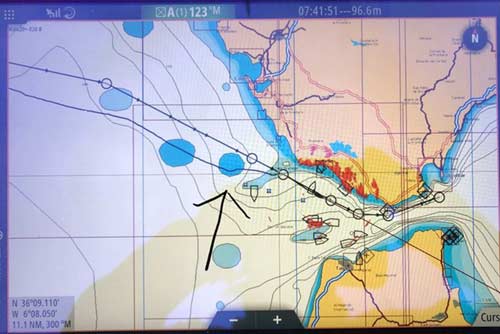
Countermeasures are also being discussed in the relevant sailing forums. Mostly behind closed doors, because orcas are an endangered species, and therefore any more massive resistance is of course prohibited.
Nevertheless, defense ideas are being discussed. From chlorine or diesel, to small firecrackers, PVC pipes equipped with megaphones, or metal rods that reach into the water and that are worked with hammers to drive away the animals with noise, as Canadian fishermen allegedly do. Reversing under engine has also been considered useful.
We are excited to see how it goes. On the current trip, we have definitely prepared ourselves a little and will see whether the defensive measures are successful if necessary. Because just playing dead and waiting until you are unable to maneuver cannot, in our opinion, be a forward-looking strategy. It must be possible to defend oneself, at least to deter massively: Wouldn’t every animal laugh at you otherwise?
The attack on a Y7 hit us at this point. The authorities have now set up a restricted area there.
We are currently traveling in the region with this Lagoon 50
Orca attacks occur particularly around Cape Fisterre.
We were attacked with this Y7 in July ’21, the animals can usually not harm such yachts. The situation is of course different with smaller ships…
Share this blog -
Subscribe to our newsletter to receive the latest blogs & stories from Yachtskipper.eu
interesting blogs