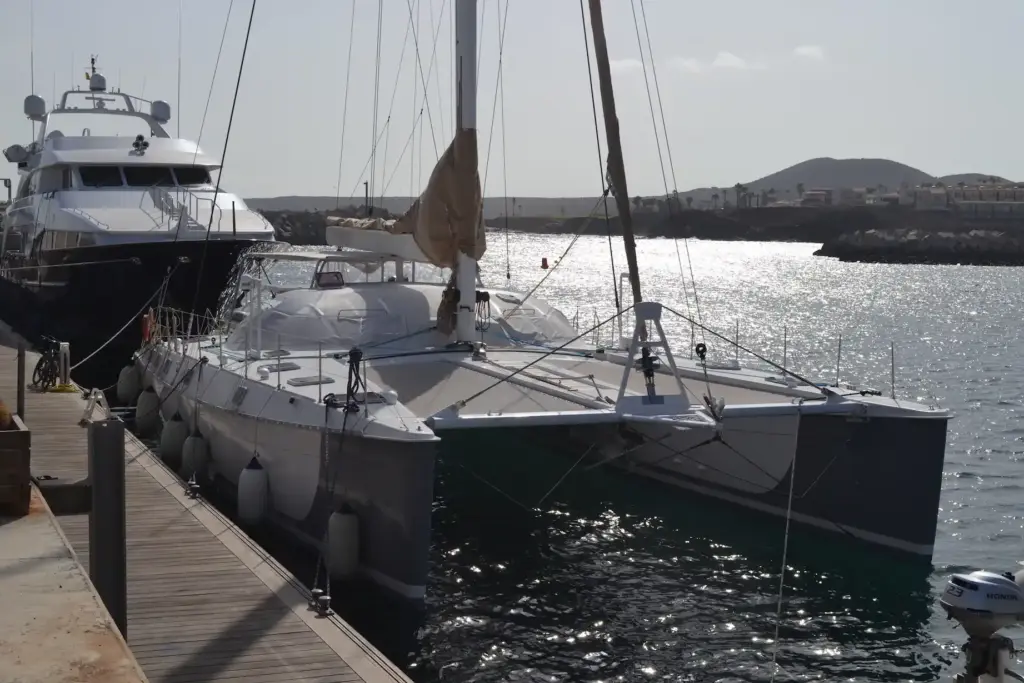
Across the Atlantic on an Outremer 62 – from Las Palmas to Saint Lucia
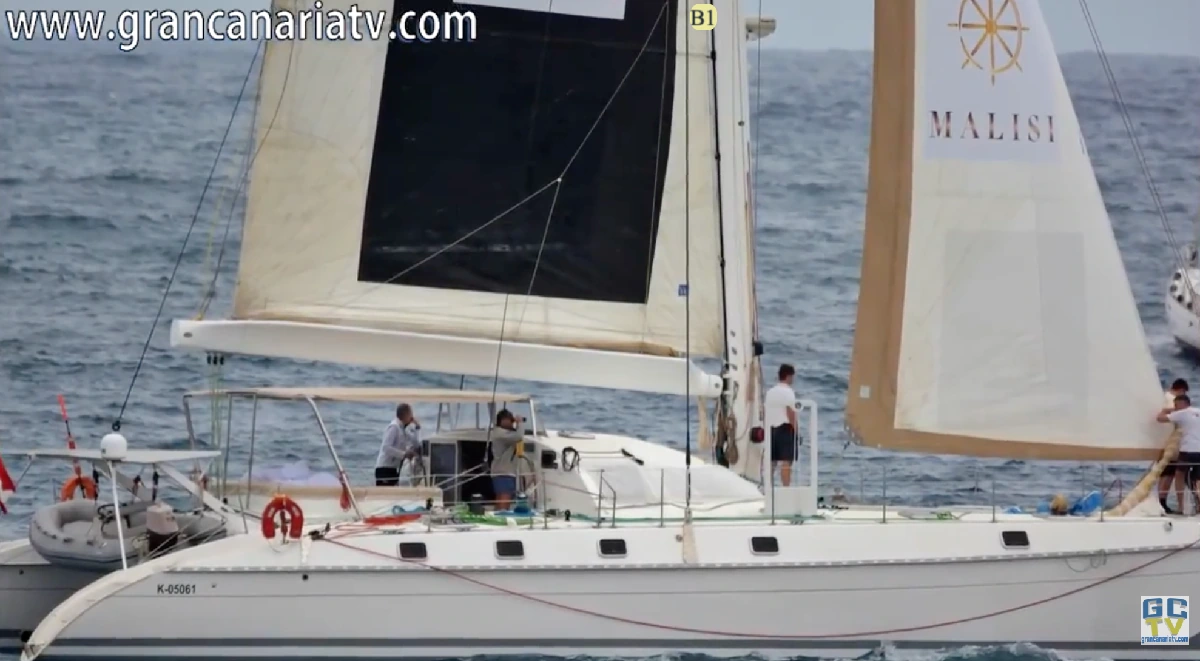
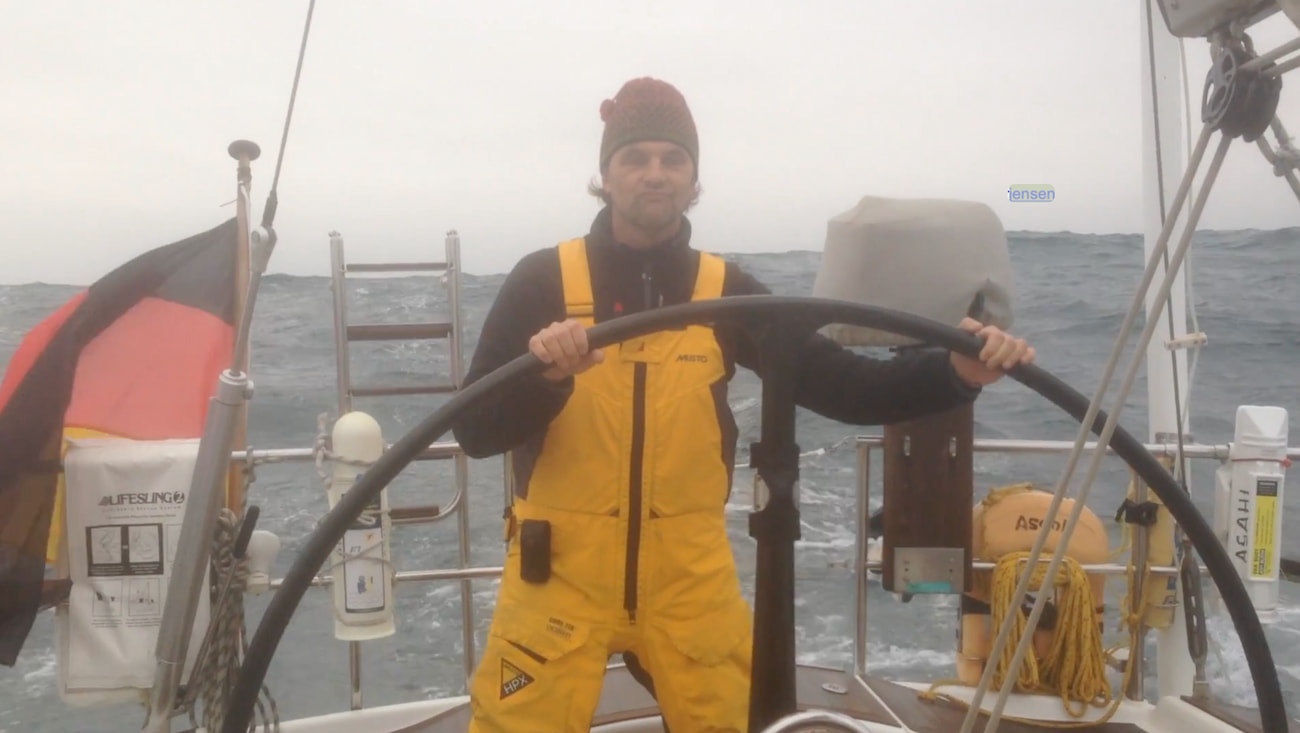
Rally logbook by Rainer Holtorff, skipper of Malisi, an Outremer 64 Light
November 10 · Before the start
The rally starts today at 2 PM CET. We plan to ride the trade winds down to Mindelo in Cape Verde.
Around 50 boats are starting the ARC+ in Las Palmas on Gran Canaria. Everyone is eager to get going, yet still wondering: Do we really have everything? Do we even need diesel? Where will the tomatoes survive once we reach the tropics? Once you’re gone, you’re gone!
November 10 · At sea
We’re underway now. Things were a little exciting at the start line, but we found our gap and quickly took the lead. We’re still there, two nautical miles ahead of our nearest competitor. Of course, we also have a handicap, but even with that we’re doing well. The last I heard, we were fourth overall.
The sea is blue now, and we’re enjoying a wonderful sail under spinnaker at up to 17 knots. Until later, probably in four or five days, when we reach Mindelo!
The first night
On the first night after the start of the ARC+, we pushed our luck a little. The trade wind, strengthened by the Canary Islands, was blowing at up to 29 knots. With a full mainsail and spinnaker, we raced down the Atlantic swells. Our Outremer 64 made all kinds of noises. Above 20 knots, she began to sing, like a whole humming choir. It sounds beautiful and threatening at the same time. We stand watch, but when that singing comes and goes, it’s hard to rest. When it gets louder, you’re suddenly wide awake. Your body gets ready, even though you tell yourself: “Twenty-two knots isn’t that much. I can do that on a bicycle!” Imagine a lovely summer day, rolling downhill with a breeze behind you. Why wouldn’t you easily reach 40 kilometers per hour?
Shortly after I finally fell asleep, Matt knocked on my door. Very calmly, he said:
“We’re needed on deck.”
“Is it urgent?” I asked. “Or do I have time to get dressed?”
“I think it’s urgent,” he said.
There was commotion on deck. The spinnaker had wrapped itself around the forestay. We couldn’t take it down, and the wind was getting stronger …
Being unable to get a sail down in increasing wind, especially a spinnaker, is a nightmare. You simply can’t stop going so fast. Imagine sitting in a carriage being pulled by ten runaway horses. You don’t know when they’ll tire, whether the carriage will fall apart first, or whether you’ll go off the road somewhere.
I tried to stay calm, as I always do on board. With a prospect like that, it isn’t easy. The spinnaker had wrapped itself several times around the furled genoa and looked like a giant hourglass. How the hell had that happened? Would it soon be torn to shreds, flapping around up there for days and blocking the genoa? We all stood on the foredeck, shining our flashlights upward. The autopilot was steering the catamaran, which was racing down the waves so fast that spray shot up at us through the nets between the bows.
It took us a few minutes to come up with a plan. We put a line around the lower part of the spinnaker and wrapped up as much of the sailcloth as possible so the wind could no longer catch it. Then the six of us rotated the sail around the forestay until it was finally free. We could now ease the halyard and take the sail down. After half an hour, we had things under control again. It was a miracle that the spinnaker had survived intact, that nobody had been hurt and that nothing had broken.
When daylight came, we were only 50 nautical miles from the African coast. It would have been a good opportunity for a stopover. But we gybed and had Cape Verde ahead of our bows again, even though it was still 700 nautical miles away.
November 14 · Mindelo
We arrived in Mindelo more than twelve hours ahead of everyone else.
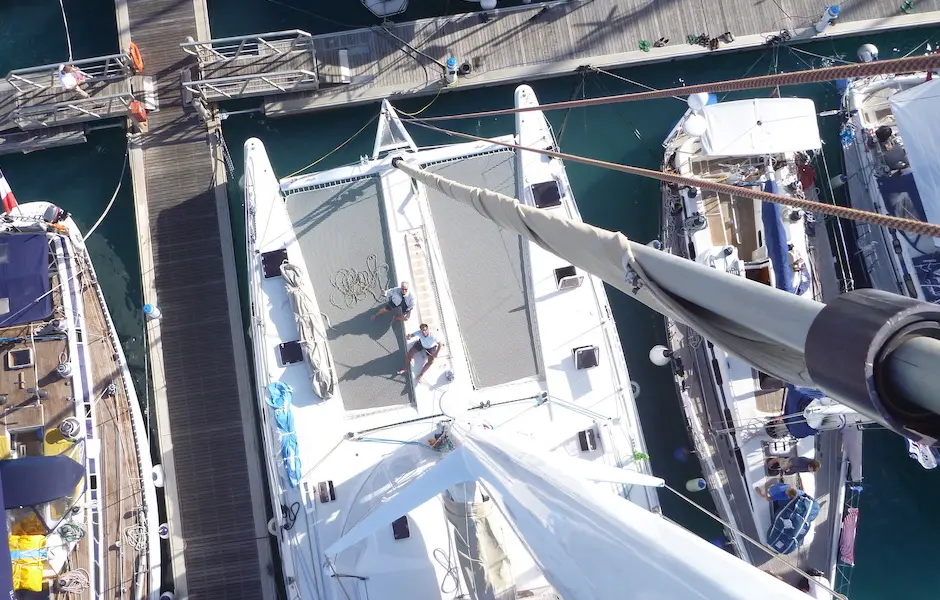
November 20 · Start of the second leg
The second leg of the ARC+ begins today. At around 1 PM local time, we plan to cross the start line with about 50 other yachts. Our Malisi is a fast catamaran, an Outremer 64 Light.
Less than two hours before the start of a downwind race, our spinnaker is still held up in customs at the airport. Apart from that, I think we’re well equipped, and the boat is in good technical condition. There are eight of us on board: three Austrians, two Russians and three Germans. I’m pleased that we now have a woman on board as well. That can make a difference to how the crew speaks to one another.
If all goes well, we expect to spend about twelve days at sea. We’re sailing in a rally, and we want to win. At the same time, there’s a hell of a lot of space out there to get stranded in if you push the speed too hard. We have 2,100 nautical miles ahead of us. The yacht is tugging at her lines like a horse eager to get going. The trade winds look good, so there should be some nice waves to surf, provided the weight of our provisions allows it.
November 23 · Malisi’s logbook
Here we are in the middle of the Atlantic, almost halfway between Mindelo and Saint Lucia. Malisi is leading the fleet. To me, she really is a beauty. As I write this, I’m sitting below deck, just behind the escape hatch. I’m watching the port hull shoot across the deep blue water, throwing up white spray.
We stand watch, steer or watch the autopilot, adjust course under spinnaker, cook, clean, make repairs and sunbathe. We measure the sun’s altitude and do our calculations. And we try to avoid arguments among our international crew, each with their different reasons for being here.
Quite a lot happened in Mindelo. About an hour before the start, our only spinnaker was still held up in customs at the airport. By the time we finally got it on board, the other yachts were already gathering at the start line.
As if we hadn’t had enough excitement, two more guests came aboard about a day before the start. They were two Russian sailors who didn’t feel comfortable on the yacht they had originally planned to sail on. We had a cabin free, so they joined us. It’s a risk setting off with people you don’t know when nobody can get off along the way. We were lucky. They’re both nice, and since we’ve had a woman on board, the way we speak to one another has improved too.
Almost at the same time as the two arrived, command changed hands. The designated skipper did not want to take responsibility for the crossing with guests on board. So command suddenly passed to me. I really hadn’t expected that, and with departure so close, I didn’t feel prepared for it.
Since then, I’ve been doing my best and working with the original skipper. He’s still on board and knows far more than I do about fast catamarans and their tactics. But everyone has their own way of running a boat. Being German, I suppose the others on board now have to live, to some extent, with my approach to seamanship, whether it concerns safety, food or who knows what else.
Apart from a few minor things, all is well on Malisi. And I must stop now, because the spray is turning orange. I know few things more magnificent than a sunset on a downwind course in the middle of the Atlantic. You know you’re far away from all the important things happening on this planet. And you don’t care, because you’re here.
I have to correct myself. There is a moment at night that is almost as beautiful as these afternoons at sunset: when, after long dark hours, the moon rises behind you in the east. Suddenly you see silver waves rolling toward you, an endless sea of light.
I wish all of you out there a good voyage! A big thank-you to the ARC+ shore team, Suzanna, Kearan and Paul. Great job! How did you manage to stay so calm and polite through all the excitement before the start in Mindelo? And Kearan, did you actually go bodysurfing with her?
Rainer Holtorff, skipper of Malisi
November 30 · Arrival in Saint Lucia
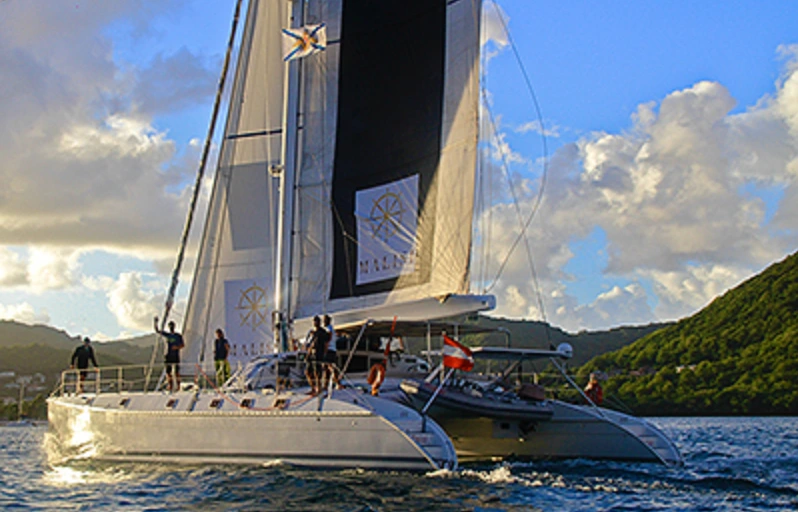
The ARC+ reports the first arrival; the following is translated from the German:
“Congratulations to the crew of Malisi! After a fast passage of 2,100 nautical miles from Marina Mindelo in Cape Verde, the yacht has just crossed the finish line off Rodney Bay Marina. After almost ten days at sea, everyone is delighted to be in Saint Lucia. They crossed the finish line here at 6:45 AM local time.”
December 3 · Looking back on the crossing
We had a fast Atlantic crossing. We were in a rally, yes, but we really treated it more like a race. We sailed under full sail, even at night when squalls came up from astern. The spinnaker had to be repaired a few times, but each time it was quickly back up.
Malisi, our lightweight 64-foot Outremer catamaran, is an exceptional boat. In the lightest breeze, she finds her way across the water. When the wind picks up, she takes off. The hulls begin to plane, as if she were built to fly.
Even after weeks on board, I still stand at the bow between the nets, fascinated. The spray thrown up by the hulls sounds like a rapid drumroll. Months before I first sailed her, I heard that her owner paid close attention to weight. Apparently, he checked every item that came on board. Many things were taken off again and replaced with something lighter. At first, it sounded like an obsession to me. Now I understand.
Because she is so light, we didn’t have to put a reef in the mainsail during the entire Atlantic passage. When the spinnaker wasn’t up, we sailed with a Code Zero or gennaker. There were gusts that came with the rain, but they only made us faster. The boat turned them into speed. When we arrived, our nearest competitor in the multihull division, a brand-new 62-foot Lagoon, was about 300 nautical miles behind us.
Anyone who thinks we suffered the whole time should have seen us on the last night before our arrival. We had a barbecue in the cockpit. There was music and food, and the autopilot was steering. The boat moved so little that we almost forgot where we were, until someone said: “Everyone! Remember: we’re sailing …!”
Yes, we were. At 15 knots under spinnaker, still far out on the Atlantic. It just didn’t feel like it.
December 5 · What the rally organizers wrote
World Cruising Club reported on our crossing; the following is translated from the German:
“After their main email connection failed shortly after leaving Mindelo, the crew of Malisi did not know exactly where they stood in the fleet. They hoped, however, that they were making good progress. Perhaps the technical failure even helped them. The next arrival is not expected for more than 24 hours.
‘Most of the time, we really didn’t know where we stood in the fleet. But that meant we kept pushing from start to finish,’ said Rainer, skipper of Malisi.”