The Last Two Miles – A Yacht Delivery That Almost Went Wrong
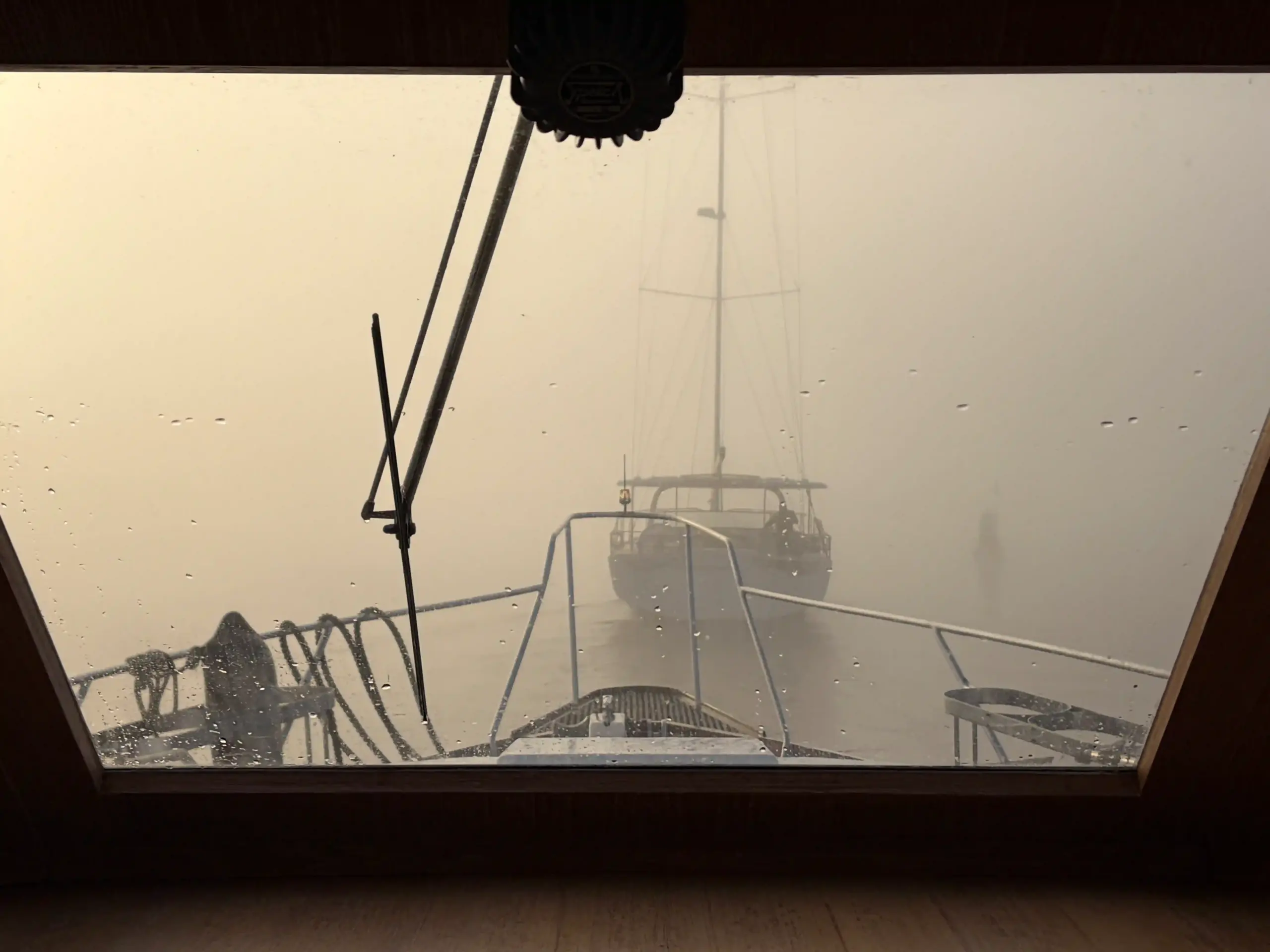


Yacht delivery: 90 nautical miles, a 50-year-old classic motor yacht, 40,000 euros of time pressure – and suddenly dense fog in the Warnow estuary.
Sometimes the sting is in the tail. Just like with this job on the Baltic Sea…
At the beginning of the week, I had to step in because a skipper threw in the towel the evening before a planned delivery. It concerned a motor yacht that was to be delivered from Wolgast to Rostock. Just 90 miles.
The problem: A spot on board a cargo ship to Genoa had already been booked for the yacht. If the boat isn’t alongside in time for the loading date, a small fortune would be lost.
Although we have a large network of experienced skippers, with less than 24 hours’ notice, I didn’t even try to find someone else. So, I made my own way to Wolgast.
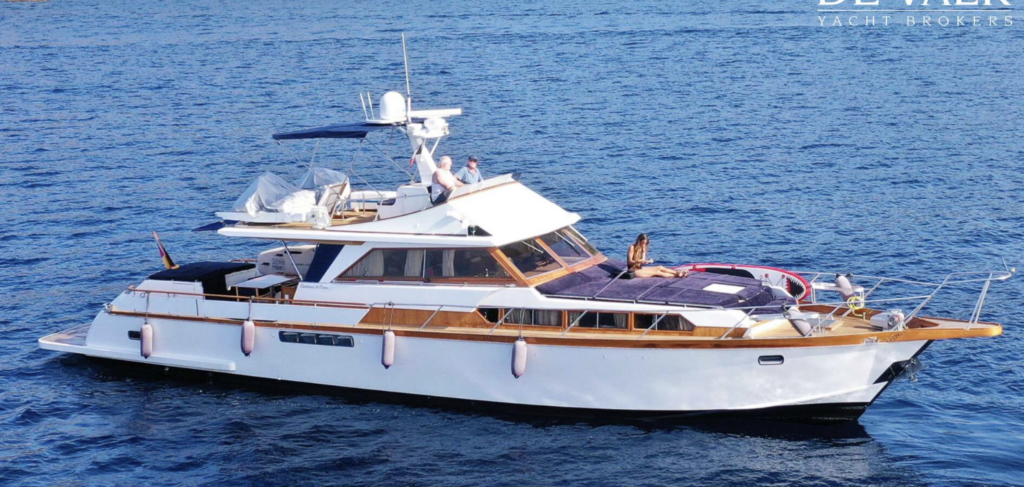
There, I was met by the new owner of a Cantieri di Pisa 65, built in 1972. An impressive planing hull yacht, around 20 meters long, with two engines producing over 730 hp each.
There was a brief handover by the previous owners. So, there wasn’t much time to familiarize ourselves with the technology.
And off we went down the Peene – even at idle speed, the yacht does eight knots…
A vessel that has been tinkered with over decades and had hardly been moved in recent years can hold many surprises. Added to that was rather poor navigation equipment: no plotter, no AIS, no functioning radar, no fixed radio. The radar mast had been lowered before the trip so that we could pass under the bridges…
Even before departure, we had agreed that in such a setting, the owner should ‘be in charge.’ After all, it was his ship, and as a professional, I didn’t want to take full responsibility for a delivery under time pressure with this equipment.
The owner had owned a ‘Ferretti’ for a few years but had significantly less nautical experience than I did. Of course, I could have said at any time: “I won’t sail under these conditions!”
But then there was that large sum of money at stake if the loading date was missed.
At first, the old ship performed bravely. Apart from a dead engine battery after a night in Stralsund, there were no noteworthy technical problems.
On the afternoon before the loading date, we moored in the Alter Strom of Warnemünde. Only about two nautical miles left to the freighter’s berth, where we were expected punctually at nine o’clock the next morning.
We were relieved because we thought the most difficult part, at least, was behind us.
But the next morning, there was dense fog. You could hardly see your hand in front of your face.
The last information from Sevenstar, the shipping company, had been clear: we were to be at the freighter by nine o’clock.
When the visibility seemed to improve slightly, we decided to depart. Our plan was to stay on the right side of the channel, give regular sound signals, and then cross towards the commercial port when the ‘coast was clear.’
But as soon as we left the Alter Strom, the fog became thicker again. Much thicker.
Of all times, the iPad we were using for navigation started acting up. The screen kept freezing.
We were in the middle of the Warnow estuary, where large ferries and cargo ships operate, and we saw nothing but fog around us. Without radar and a reliable position, it was life-threatening.
I am usually someone who stays calm on the water. But when a green channel buoy suddenly appeared and I realized that we had apparently crossed the channel unintentionally, I became nervous.
“Over, back to the west!” I shouted to the owner, who was at the helm.
He tried to steer accordingly, but the iPad failed again, and somehow we were driving in zig-zags.
Then a sailing yacht suddenly emerged from the fog.
A large Hanse! And a Hanse 590 was actually listed in the loading documents. I could dimly make out a man on deck.
That had to be our colleague!
I ran forward and shouted through the fog, asking if he was also heading for the ‘FWN Performer.’
He said yes.
We followed him, and buoy after buoy emerged from the fog. Not far from us, a huge bow pushed through the haze. The name FREDO was written on it; it was a freighter leaving the Warnow.
An oppressive sight. The thought of getting in front of such a bow was not pleasant.
As it sometimes goes with fog, it ended suddenly.
The gray wall broke open.
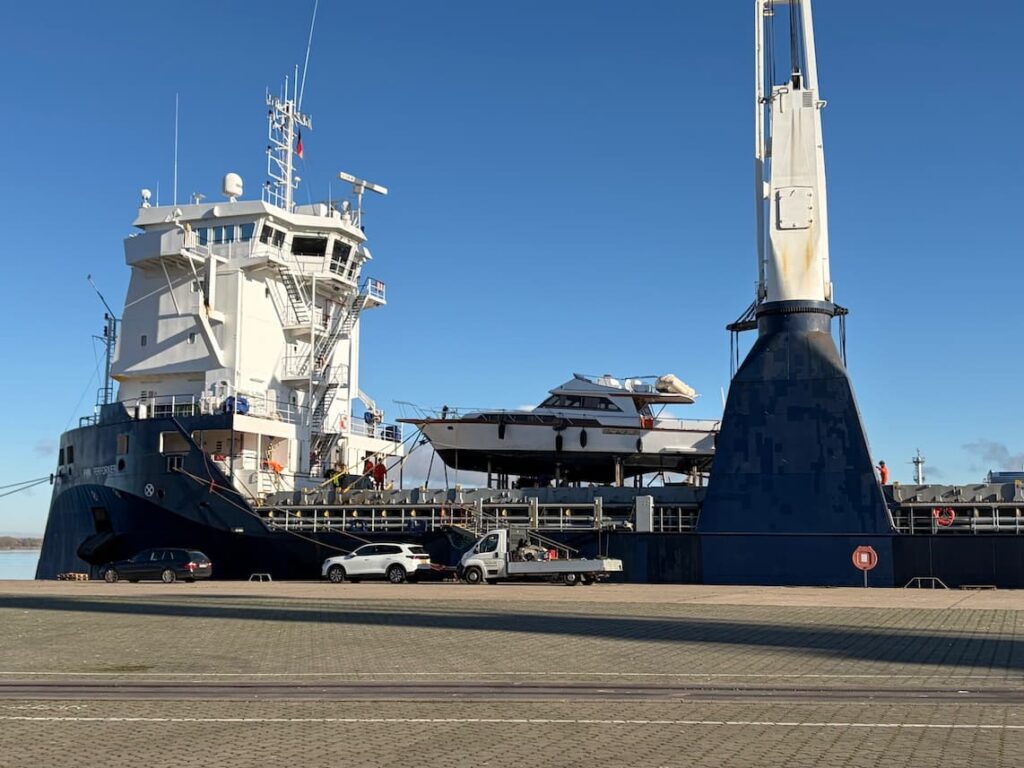
Before us lay the harbor in the sunshine. Quays, cranes, cargo ships – and a little later to starboard, the FWN Performer, on which our old Cantieri di Pisa was to begin its journey to Genoa.
Behind us, however, the Warnow estuary still lay under a thick, impenetrable blanket of fog.
In hindsight, I naturally wonder if we couldn’t have done better: a call to Sevenstar to describe the situation and ask if it would have been possible to postpone the loading slightly.
Perhaps that would have been no problem. Perhaps not.
We didn’t try.
Next time, I might insist on it. You never stop learning.
The last two miles can be more difficult than the ninety before them. And sometimes the most difficult nautical decision is not to cast off at all.

Share this blog -
Subscribe to our newsletter to receive the latest blogs & stories from Yachtskipper.eu
interesting blogs